How Punk Influences Modern Rap Music — And Why the Connection Runs Deeper Than Sound
Two Genres, One Attitude
Punk and rap share the same core impulse: say what the mainstream won't, and say it loud. Both genres emerged from communities that had been pushed to the margins — punk from working-class youth in the mid-1970s, rap from Black neighborhoods in New York where institutional neglect was the norm. Neither asked for permission.
That's the through-line that matters most. Before the sonic crossovers, before the collaborative records, both genres were built on urgency and authenticity. You didn't need a record deal. You didn't need a gatekeeper. You needed something real to say and enough nerve to say it.
The anti-establishment posture runs through both traditions like a fault line. Punk bands sneered at arena rock's excess. Early rap crews documented street realities that radio refused to touch. Different textures, identical defiance.
The DIY Thread: From Zines to Mixtapes
The DIY ethic is where punk and rap's shared DNA becomes most visible. Punk gave the world the fanzine — self-published, photocopied, distributed by hand at shows. Rap gave the world the mixtape — self-recorded, dubbed onto cassette, passed around neighborhoods before any label heard it.
Both formats bypassed the industry entirely. That wasn't just a practical workaround; it was a statement. Controlling your own output meant controlling your own narrative.
Today, that tradition lives in independent artists who self-release on Bandcamp, record in home studios, and build audiences without ever touching a major label's infrastructure. The tools changed. The principle didn't. When a rapper drops a project with zero label involvement — handling the production, artwork, rollout, and distribution themselves — they're running the same playbook that punk pressed into vinyl decades ago.
The overlap between punk zine culture and rap mixtape culture also shaped how communities formed around music. Both were participatory. Fans weren't passive consumers; they were distributors, writers, advocates. That grassroots loyalty is something streaming algorithms still can't manufacture.
When the Sounds Collided: A Brief Historical Arc
The documented crossover between punk and rap is older than most people realize. Bad Brains, the Washington D.C. band that became foundational to hardcore punk, started as a jazz-funk group before pivoting — and always maintained a tension between musical worlds that felt genuinely unresolved, in the best way. Their velocity and aggression directly influenced how energy was understood in underground music across genres.
Dead Kennedys brought political satire and abrasive production into punk at a time when rap was making its own sharp turns toward social commentary. These weren't parallel universes — they were adjacent rooms in the same underground building.
Flea of Red Hot Chili Peppers, a band that formed explicitly in the space between punk, funk, and rap, represents a specific moment when cross-genre fluency stopped being a novelty and became a creative strategy. Hip-hop producers started sampling punk energy, not just soul and jazz.
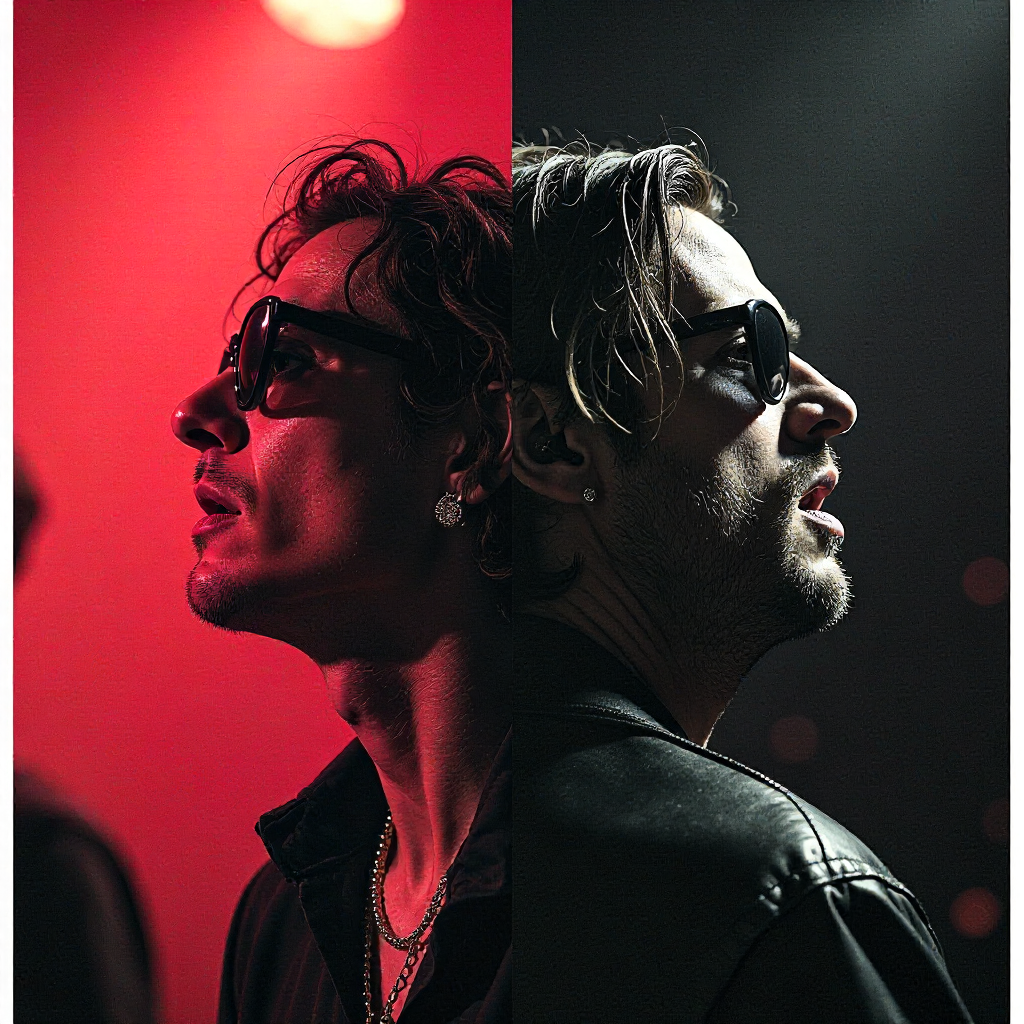
By the 1990s and into the 2000s, the conversation between the genres had become impossible to ignore. It showed up in production choices, in touring lineups, in how artists talked about their influences in interviews.
Distortion, Noise, and the New Rap Aesthetic
Modern rap production is increasingly reaching for textures that punk and hardcore claimed first. Distortion, clipping, abrasive drum sounds, and deliberately lo-fi recording quality now signal authenticity in rap the same way they did in punk — rawness as a choice, not a limitation.
Some of the most interesting production in alternative hip-hop today sounds genuinely uncomfortable. Beats that clip slightly too hard. Samples that weren't cleaned up. Vocal recordings with room noise left in. This isn't technical sloppiness. It's a specific aesthetic philosophy borrowed directly from punk's rejection of over-produced, sanitized sound.
The noise element is worth sitting with. Punk used distortion and volume as confrontation — it physically displaced the listener. Certain rap producers now use similar sonic pressure, creating beats that demand engagement rather than inviting passive listening. The effect is the same: you can't have this on in the background.
Raw vocal delivery follows the same logic. Where mainstream rap often emphasizes polish and melodic precision, the punk-influenced corner of hip-hop values delivery that sounds immediate, almost unprocessed. The performance bleeds through.
Lyricism as Revolt: Social Commentary Across Both Genres
Lyricism as protest is the most direct ideological connection between punk and rap. Both genres built their reputations on saying things that institutions — government, media, music industry — wanted left unsaid.
Punk's social commentary ran from anti-war disgust to attacks on consumer culture to specific political targets. Rap's street narratives documented poverty, police violence, and systemic neglect with a documentary precision that journalism often missed. Different language, different communities, identical function: bear witness, then transmit.
The parallel gets sharper when you look at how both genres handle personal experience. Punk didn't separate the personal from the political — a song about feeling alienated and a song about Reagan-era policy came from the same emotional source. Rap operates the same way. The autobiographical and the systemic aren't separate categories; they're the same story told at different scales.
What makes this connection durable is that both genres treat authenticity as a non-negotiable. Selling out doesn't just mean signing to a major label. It means losing the thread back to what you actually lived and believed. That standard keeps both traditions honest — and keeps their most serious practitioners accountable to something beyond chart performance.
Alternative Hip-Hop and the Punk Mindset
Alternative hip-hop is the subgenre that most directly absorbed punk's influence, particularly its ideological core. Artists in this space have consistently prioritized creative control, unconventional production, and lyrical substance over commercial formulas.
The punk mindset in alternative hip-hop isn't just about sounding aggressive or adding guitar. It's about the operating philosophy. Refusing to chase trends. Building an audience that actually listens rather than a fanbase that just streams. Treating the album as a cohesive statement rather than a playlist of singles.
This is the zone where genre-blending stops being a marketing angle and becomes creative precision. Artists who exist in this space — drawing from punk's energy and rap's lyricism simultaneously — aren't compromising between two genres. They're working in a territory that both genres opened but neither fully claimed.
Creative autonomy is the operating principle. When an artist controls their sound, their visuals, their rollout, and their live presentation without institutional interference, they're not just being indie. They're continuing a specific tradition that both punk and rap established independently and then converged on.
Carrying It Forward: What This Means for Artists Today
For contemporary artists working at the crossroads of punk and rap, the inheritance is both practical and philosophical. Practically: self-release, self-produce, own your masters, build direct relationships with your audience. Philosophically: stay close to what's true, resist the pressure to smooth your edges for broader appeal.
Live performance is where this convergence becomes most physical. Both punk and rap communities built their cultures around shows that felt like events — confrontational, communal, immediate. The energy in a punk room and the energy in a rap show share something that a polished pop performance doesn't: the sense that something could actually happen, that the performer is genuinely present and not running through a set list on autopilot.
Artists like HXLT operate in exactly this crossover territory — drawing from alternative hip-hop's lyrical depth and punk's refusal to compromise on creative direction. That position isn't a niche. It's a tradition with serious roots.
The broader point for any artist navigating these influences: the connection between punk and rap was never just sonic. Genre-blending at the surface level — a distorted guitar in a rap beat, a rapper at a punk venue — matters less than the underlying values. DIY distribution, anti-establishment lyricism, raw live energy, creative autonomy. These aren't borrowed aesthetics. They're a shared inheritance.
What punk taught rap, and what rap has carried forward, is that the music industry's gatekeeping function was always optional. The audience was always accessible directly. The most important work was always made outside the system, not within it.
FAQ: Punk and Rap Connections
What is the connection between punk rock and rap music?
Both genres emerged as outsider voices rejecting mainstream culture, sharing a DIY ethic, anti-establishment ideology, and a commitment to authenticity over commercial polish. The connection runs deeper than sound — it's a shared operating philosophy about who gets to make music and on whose terms.
Which rap artists are influenced by punk?
Many artists in the alternative hip-hop space draw explicitly from punk's energy and attitude. The influence shows up in production choices, lyrical confrontation, and the decision to operate outside major label systems — prioritizing creative control over commercial optimization.
What does "DIY" mean in hip-hop?
In hip-hop, DIY (Do It Yourself) means self-producing, self-releasing, and self-distributing music without relying on label infrastructure. It traces directly back to punk's independent pressing and fanzine culture, adapted through rap's mixtape tradition into today's Bandcamp and self-release era.
Is alternative hip-hop related to punk?
Yes — alternative hip-hop is the subgenre most directly shaped by punk's influence, particularly its rejection of genre conventions, emphasis on artistic integrity, and preference for unconventional production over radio-friendly formulas.
How does punk influence show up in modern rap production?
Modern rap production increasingly uses distortion, lo-fi textures, clipping drum sounds, and raw vocal delivery — all sonic signatures borrowed from punk and hardcore. These choices signal authenticity and creative intent, not technical limitation.