How to Build a Unique Sound by Blending Hip-Hop and Punk
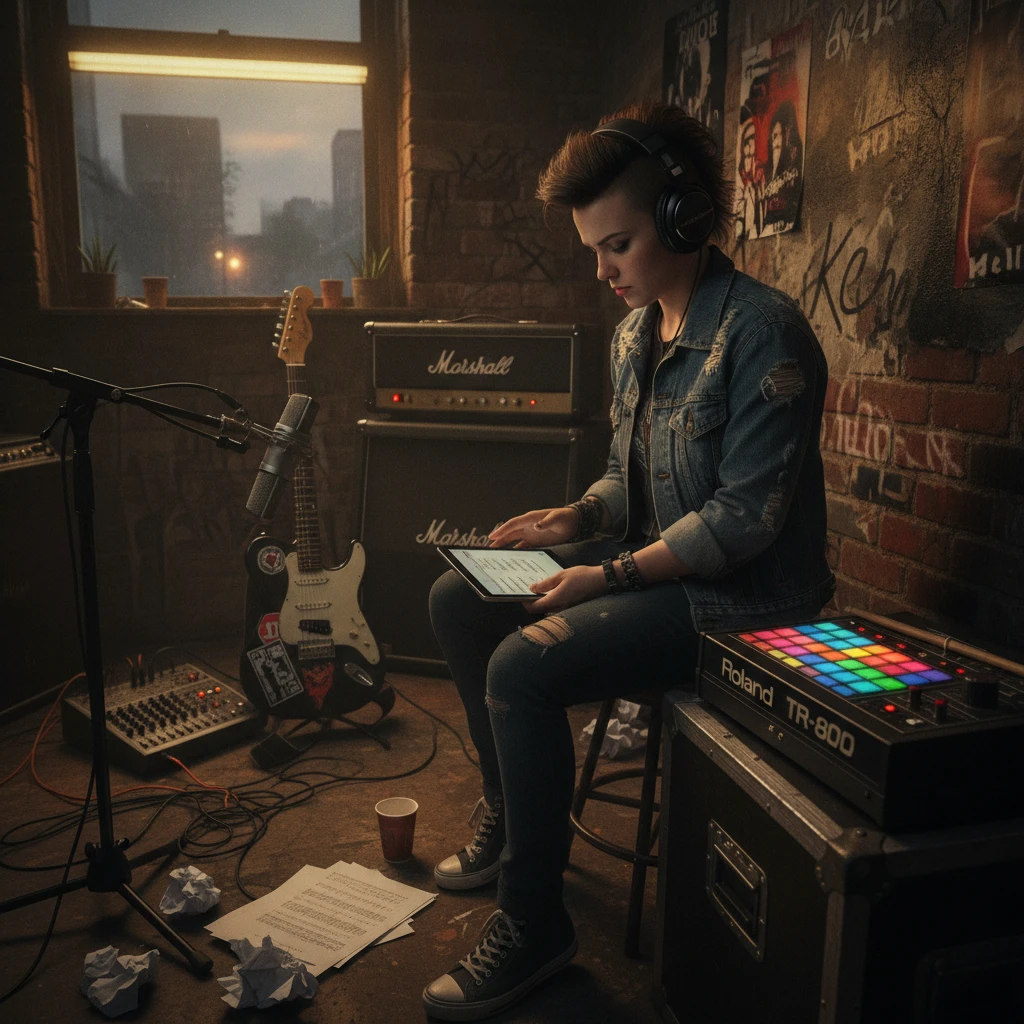
Hip-hop and punk can share a song without losing what makes each compelling: hip-hop’s rhythmic focus and vocal flexibility, alongside punk rock’s urgency and abrasive energy. The key is to make deliberate choices about feeling, groove, arrangement, and point of view rather than treating either genre as a checklist.
Start with the effect you want the song to have. Then choose the musical elements that serve it. A tight programmed beat under a raw guitar riff might create tension; a shouted hook over a spacious, head-nodding groove might make the chorus feel explosive. There is no required instrument, production method, or formula for making the blend work.
Start with the feeling you want to create
To build a distinctive hip-hop and punk sound, first define the song’s mood, energy, and point of view. Those decisions give you a creative filter for choosing rhythms, sounds, lyrics, and performances.
Write a few plain-language notes before opening a session: restless but controlled, defiant and funny, or lonely with a loud release. Add a point of view, too. Is the narrator confronting someone, admitting a contradiction, or telling a story? A clear emotional center helps unlike elements feel connected.
Next, describe the song’s physical movement. Should listeners nod their heads, jump, or feel the tension of a beat that never fully resolves? This gives you a practical test for ideas. If a part sounds exciting on its own but pushes the track toward the wrong mood, revise or remove it.
Try a one-sentence brief: “A clipped, lurching verse builds into a chorus that feels like a roomful of people pushing back.” Use that line to guide your first choices. It is more useful than deciding in advance that the song needs a certain tempo or a particular punk tone.
Identify what to borrow from each genre
Hip-hop and punk work together when you select specific traits from each rather than trying to reproduce a complete genre template. Hip-hop can contribute rhythm and vocal phrasing; punk can bring guitar attack, rawness, and a sense of urgency.
From hip-hop, consider a loop-based foundation, syncopation, a strong pocket, repeated motifs, or rapping that plays with the beat. A vocal can sit slightly behind the pulse for weight, race ahead to sound agitated, or switch between the two. From punk rock, you might borrow a short, memorable guitar riff, distorted texture, direct lyrics, or a chorus built for forceful group vocals.
These are options, not rules. Punk does not always mean fast power chords, and hip-hop does not always mean sampled drums or a fixed rhythmic feel. Let the song tell you which features matter.
- Choose one anchor: Decide whether the listener should first notice the groove, the vocal, or the riff.
- Add a contrasting feature: Pair a steady beat with an unstable guitar figure, or a forceful riff with a relaxed rap delivery.
- Keep a shared thread: Reuse a rhythmic phrase, melodic shape, lyrical image, or sound across sections.
That shared thread is what turns a collection of influences into a song with its own logic.
Build a groove around contrast
Build the groove by deciding how drums, bass, and guitar relate to the same pulse. Contrast works best when the parts leave each other room and create a clear rhythmic center.
Start with either a simple drum-programming idea or a live drum pattern, then add one element at a time. A programmed kick and snare can provide consistency while a live drummer adds fills, looseness, or sudden accents. Alternatively, record a live kit first and use a restrained programmed layer to reinforce only the key hits. The trade-off is straightforward: tighter repetition can make the track hit harder, while too much quantizing can flatten the performance.
Give the bass a specific job. It might lock to the kick, answer the vocal, or move against a guitar riff. If kick, bass, and low guitar all play busy patterns in the same register, the groove can blur. Simplify one part before reaching for more processing.
Guitar riffs and distortion can supply punk rock’s bite without filling every beat. Try a short, syncopated phrase that leaves gaps for the rapper, or hold a sustained chord over a crisp hip-hop rhythm. A riff does not need to be loud throughout the track to feel important; bringing it in at the end of a verse can make the chorus land harder.
Use contrast as an arrangement tool: keep the verse rhythm sparse and let the guitar widen the chorus, or let a busy guitar pattern sit over a minimal beat. If both layers demand attention at once, mute or simplify one and listen again.
Shape vocals and lyrics to fit the sound
Shape the vocal by matching delivery to the song’s pulse and emotional point of view. Rapping, singing, shouting, and spoken delivery can coexist when each has a clear role in the arrangement.
Write to the actual rhythm section, not an imagined one. Speak the lyric over the beat before refining the cadence. Mark where the important syllables fall, then leave space for breaths and instrumental responses. A dense rap verse may work over a steady, uncluttered groove; a shouted line can cut through a busy section if it arrives at the right moment.
For a hybrid vocal, assign different jobs to different textures:
- Rap the verse to deliver detail, narrative, or quick shifts in perspective.
- Sing the hook when the melody needs to stay with listeners after one listen.
- Use shouting or spoken lines for emphasis, a change of character, or a brief burst of tension.
Lyrics can connect the styles as strongly as the instruments. Concrete details and a distinct voice usually feel more personal than broad declarations of rebellion. Read the words aloud at performance volume: if a phrase is hard to articulate, shorten it or change the stress pattern. The most technically dense line is not automatically the most memorable one.
Arrange and produce with intention
Arrange and produce the song so each section has a clear purpose and the shift between hip-hop and punk feels deliberate. Dynamics, entrances, and recording choices can create cohesion without forcing every sound into the same texture.
Sketch a simple structure before polishing individual tracks. For example, a verse might establish the beat and vocal, a pre-chorus could remove the bass for a moment, and the chorus could bring in a distorted riff and doubled vocals. The contrast gives the chorus impact because the song has created room for it.
Try small changes before adding more layers. Drop the drums for one bar, cut the guitar before a vocal line, or let a repeated sample become the transition into a new section. Sampling can provide a rhythmic or textural link between parts, but it is optional. A recorded guitar scrape, a vocal fragment, or a deliberately repeated drum pattern can play a similar role. If you use a sample, confirm that you have the rights to use it before release.
Production choices should preserve the character of the performance. A tightly edited beat can sit beside rough-edged guitar, but an overly polished vocal may feel disconnected from a raw instrumental. Conversely, a deliberately messy mix can obscure the groove and lyrics. Listen at low volume: if the main rhythm and vocal disappear, revisit balance and arrangement before adding effects.
Think in layers of attention: choose what leads in each section, what supports it, and what stays out. That simple hierarchy often solves a crowded mix at the writing stage.
Make the result unmistakably yours
A genre blend becomes personal when its choices reflect your own habits, references, and perspective. Build artistic identity through specific musical and lyrical decisions, not by copying a familiar hip-hop-punk combination.
Notice what you naturally return to: an unusual drum accent, a particular guitar tuning, a conversational vocal, or lyrics that mix humor with frustration. Keep a short list of those tendencies. They can become recurring signatures, but they should remain flexible rather than turning into a new formula.
Borrow methods, not finished answers. Instead of recreating a reference track’s exact riff and beat, ask what you respond to: the sudden drop, the vocal’s relationship to the snare, or the way a rough recording makes the chorus feel immediate. Then find a different way to create that effect with your own material.
A useful test is to mute one genre-associated element at a time. If removing the distortion makes the song feel more like your voice, the guitar may be serving the idea. If removing the beat collapses the song’s identity, rhythm may be its real center. Neither result is a problem. The purpose of blending is to discover what the song needs, not to prove that every influence is present.
Test, refine, and perform the song
Test a genre-blending song with a rough demo, a full-band rehearsal, and focused listener feedback. Each setting reveals a different problem: the demo checks the writing, rehearsal tests physical energy, and listeners can tell you what actually stays with them.
Make a quick demo with only the core parts: beat or drums, bass, guitar, and a guide vocal. Listen once for the emotional effect and again for the arrangement. Note specific moments rather than writing “it feels off.” For instance: “The riff covers the last words of the verse,” or “The chorus arrives without a change in energy.” Specific observations lead to usable edits.
Then rehearse the song at performance volume. A programmed groove that felt powerful in headphones may need live accents, while a guitar part that worked alone may crowd the vocalist onstage. Let musicians adjust their parts to the room and the performance; the recorded version does not have to dictate every live choice.
When you ask for feedback, use narrow questions: “Which line do you remember?” or “Where did the energy change?” Avoid asking whether the song is good. Listeners may offer opinions about taste, but their descriptions of what they heard can reveal confusion or an unexpectedly strong moment.
Refine one issue at a time. If the blend feels disjointed, check for a shared rhythmic motif, lyrical perspective, or transition before forcing the sounds to match. Cohesion comes from relationships between parts. Keep the choices that make the song feel more like itself, and let the rest go.