The Role of Lyrics in Storytelling Within Rap and Punk
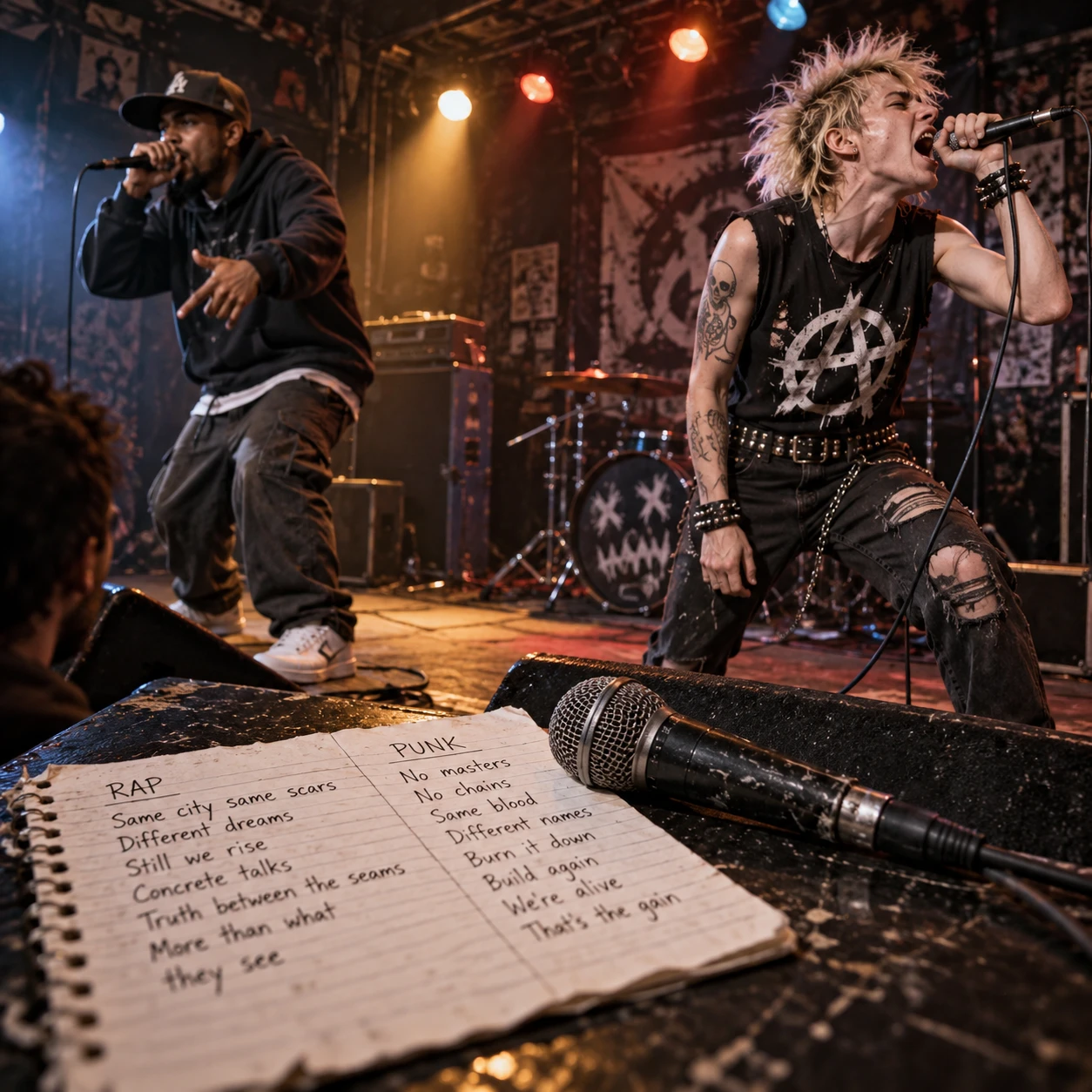
In rap and punk, lyrics can turn a song into a scene: a voice speaks, a place comes into focus, and something is at stake. The story might unfold through detailed verses or arrive in a few blunt lines, but its impact depends on how words work with rhythm, sound, and performance.
These genres don’t share one storytelling formula. Rap can use shifting perspectives and intricate rhyme, while punk often favors compression and urgency. Both give musicians ways to make personal experience, conflict, and social commentary feel immediate to a listener.
Lyrics as the engine of a song’s story
Lyrics tell a song’s story by establishing a speaker, a situation, and a change or conflict. A few specific details can show who is speaking, where they are, and why the moment matters.
Think of narrative as a set of choices rather than a full plot. The narrative perspective might belong to the songwriter, a fictional character, or someone observing events from the edge. That voice creates expectations: a first-person account feels close, while a narrator describing someone else can create distance, suspense, or doubt.
Character and setting become convincing through detail. A bus ticket, a cracked phone screen, or the sound of a door locking can suggest a larger world without explaining every part of it. Such imagery gives listeners room to picture the scene and infer what the speaker may not say outright.
Conflict supplies the song’s emotional stakes. It could be a breakup, a confrontation with authority, a private contradiction, or the pressure of a community in crisis. A song does not need a neat resolution; an unanswered question or a changed attitude can provide a satisfying ending. The key is that something shifts, even if the situation remains unresolved.
Rap storytelling through voice, detail, and flow
Rap storytelling uses voice, rhyme, and rhythmic delivery to guide listeners through a perspective or sequence of events. The rapper can control not only what the audience learns, but also when each detail arrives.
A verse may move from a present-day scene into memory, then return with new meaning. Changes in pronouns, tense, or vocabulary can mark a shift in character without a spoken explanation. A narrator might sound confident at first, for example, then reveal fear through a small admission or a sudden break in the pattern.
Rhyme and wordplay do more than decorate a story. Internal rhyme can speed up a tense passage; a delayed rhyme can make a key word land with extra weight. A carefully placed punchline may expose a character’s attitude or sharpen a criticism. The craft works best when listeners can follow the scene as well as appreciate the technique.
Rhythm and flow shape the listener’s sense of time. A clipped delivery can make a speaker sound impatient or guarded, while a relaxed flow can suggest reflection. A rapper can also crowd the beat during a chaotic moment or leave space after an important line. Those choices direct attention and give the narrative a physical pulse.
Try mapping a verse before polishing its rhymes: What does the speaker know at the start? What new information appears? What changes by the final bar? This simple sequence helps keep complex patterns connected to the story.
Punk storytelling through urgency and directness
Punk storytelling often relies on concise language, forceful vocals, and a clear point of tension. A short lyric can sketch a conflict quickly, especially when repetition and performance make its central words hard to ignore.
Directness does not mean a song has no character or nuance. A speaker can reveal plenty through what they refuse to accept, the person they address, or the image they return to. A shouted accusation, a dry aside, and a weary refrain can each suggest a different relationship to the same problem.
Repetition and hooks help condense a narrative into a phrase the audience can carry away. A repeated line might sound like a demand, a warning, or a thought the speaker cannot escape. Its meaning can change as the verses add context, so the hook becomes part of the story rather than a summary pasted on top.
Punk lyrics also make room for social commentary, from a personal encounter with power to criticism of institutions or cultural expectations. A broad slogan can energize a crowd, but one grounded detail often gives the idea more force. The trade-off is deliberate: compression brings speed and impact, while leaving some context for the listener to supply.
Where rap and punk storytelling overlap
Rap and punk storytelling overlap in their use of distinct voices, outsider perspectives, memorable lines, and resistance to accepted power. Both can make a song feel like testimony, confrontation, or a shared declaration.
Authenticity in either genre is not a matter of including the most dramatic details. It comes from a believable relationship between the speaker, the language, and the subject. A fictional narrator can feel convincing if the voice stays consistent; a personal lyric can feel vague if it relies on familiar phrases instead of revealing a specific point of view.
Both genres also use compression. Rap may pack several meanings into a rhyme, while punk may reduce an argument to one repeated line. In either case, the best memorable phrase carries more than sound. It points back to the song’s character or conflict.
The difference often lies in how each song distributes information, not in whether it can tell a story. A rap track may develop its narrative across several verses; a punk song may focus on one charged instant. Neither approach is automatically deeper. Choose the scale that fits the material and the audience’s ability to follow it.
How music and performance change the meaning
Music and performance change lyric meaning by shaping mood, emphasis, and the listener’s sense of urgency. Tempo, instrumentation, vocal tone, and song structure can reinforce the words or create a useful contrast with them.
A fast tempo can make a story feel as if events are closing in, though speed alone cannot create suspense. A sparse arrangement may expose a vulnerable line, while a dense, distorted band can make the same words feel confrontational. A steady beat beneath anxious lyrics can suggest restraint; a sudden instrumental break can make a moment of silence feel like part of the plot.
The voice matters just as much. A tightly controlled delivery may imply that the speaker is hiding anger. A cracked note or a breathless phrase can sound exposed, even if the lyric itself stays composed. In rap, changes in flow can signal a new scene or emotional turn. In punk, a repeated chorus can gather force as the vocalist and audience deliver it together.
Song structure determines when the listener receives information. A verse-chorus format can alternate between narrative detail and a recurring emotional claim. A through-composed song can follow a story without returning to the same hook. There is no required form; the useful question is whether the arrangement gives each important lyric enough space to register.
Practical ways to write a stronger narrative song
To write a stronger narrative song, choose one clear perspective, anchor it in specific details, and decide what changes by the end. Then shape rhyme, repetition, and arrangement around that change.
- Choose the speaker. Write one sentence identifying who is talking and who, if anyone, they are addressing. Keep that relationship in view as you draft.
- Set the scene with concrete details. List five things the speaker could see, hear, or touch. Use one or two details that reveal pressure or mood rather than decorating the setting.
- Give the song a turn. Decide what the speaker wants, what blocks them, and what they understand differently at the end. The outcome can stay unresolved, but the perspective should gain or lose something.
- Match the language to the delivery. Test the lines aloud over a beat or guitar part. Let rap’s rhyme and flow support clarity, or let punk’s concise phrasing and repetition sharpen the conflict.
- Revise the hook and ending. Ask whether the repeated line changes meaning after each verse. End on an image, decision, or unanswered question that belongs to this particular story.
Avoid over-explaining the backstory. Listeners need enough context to understand the stakes, not a report of every event that led to them. Also resist forcing a rhyme that distorts the speaker’s voice. A technically clever line that breaks the scene can weaken the narrative; keep it only if its sound and meaning both earn their place.
Finally, perform the draft in the arrangement you imagine. A phrase that looks powerful on the page may disappear at full band volume, while a plain line may become compelling through timing and tone. Let the recording or rehearsal reveal what the lyrics alone cannot.